

Connect
Pull data straight from the existing platform or source file, with no manual export needed.
Lavet is solution25’s migration platform. It cuts down manual work, reduces errors, and gives every project a process that scales instead of starting from zero.
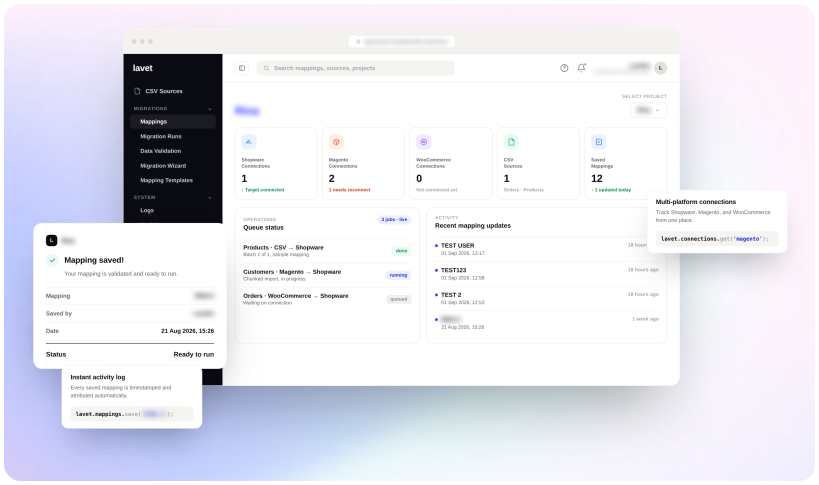
Every migration comes with its own data, structure, and requirements. Building a new process from scratch each time adds extra work and extra risk.
 WooCommerce
 Shopify
 Magento 2
 CSV / Data
+ additional integrations
Four stages, run in the same order on every project.

Pull data straight from the existing platform or source file, with no manual export needed.

Match the source data to the structure of the target platform before anything moves.

Catch missing, incorrect, or inconsistent records before they become a problem.

Move the data into the target platform through a controlled, repeatable process.
Every migration task falls into one of four groups.

Pull data from the source system at scale, without relying on manual exports.

Check data before and after migration and automatically flag missing or incorrect records.

Convert and map data into the structure required by the target platform.

Reuse proven migration logic across projects and extend it when new requirements come up.
Lavet was built after working on enough Magento, WooCommerce, and Shopify migrations to see the same problems come up project after project.

“The goal isn't just to move data from one system to another. It's a migration process that can be controlled, repeated, and trusted to scale with complex e-commerce projects.”
Anything not covered here can be clarified with the migration team.
Lavet can migrate products, categories, customers, orders, media, and custom fields. The exact scope depends on the source system and the requirements of the project.
Lavet currently supports Magento 2, WooCommerce, Shopify, CSV, and other structured data files. Additional sources and APIs can also be added depending on the project.
Data is validated before and after migration, so missing, incorrect, or inconsistent records can be identified instead of passing through unnoticed.
Yes. Field mappings are configured according to each project, allowing custom fields and unique data structures to be handled correctly.
The core migration logic is already built and tested, so each project does not need to start from zero. This reduces manual scripting and creates a faster, more repeatable migration process.
Get a clear view of performance, technical risks, conversion blockers, and migration priorities before the move begins.