Online commerce is alive with motion. Orders coming in, stock shifting, emails going out, data syncing, questions being asked. Every part has its place, but without connection, they move in different directions. This kind of friction slows things down. It creates blind spots, missed steps, and pressure on the team.
Orchestration changes that. It brings systems into sync, creates a rhythm between tools, and makes sure that when something happens in one place, everything else knows what to do. When artificial intelligence enters the picture, that rhythm becomes smarter. Tasks don’t just happen. They adjust. They improve.
AI orchestration tools Shopware supports are designed to reduce chaos. They create calm behind the scenes. Instead of juggling dozens of separate tools and actions, teams manage one clear flow where each part responds to the others.
This article is not about theory. It is about real tools working in real businesses. It explores platforms like Shopware with Temporal, Shopware with Apache Airflow, and Shopware with Retool. It connects them with automation layers like Zapier, Make, Tray.io, and n8n. Together, these tools form systems that scale, adapt, and move with the business.
At the core of this strategy is trust. Trust in the systems, in the structure, and in the partner who can help build it. That is where solution25 fits. By combining technology with clarity, it turns complexity into a system that runs smoothly and grows easily.
Free 15 min initial consultation directly with our experts.
Every online store has a pulse. Orders come in, data shifts, decisions are made. It all moves quickly, sometimes faster than a team can keep up. In that pace, things can slip. A delay here, a mismatch there. One missed step becomes many.
AI orchestration brings order to that movement. It listens to everything. It connects the dots. It creates logic from motion and turns reaction into rhythm.
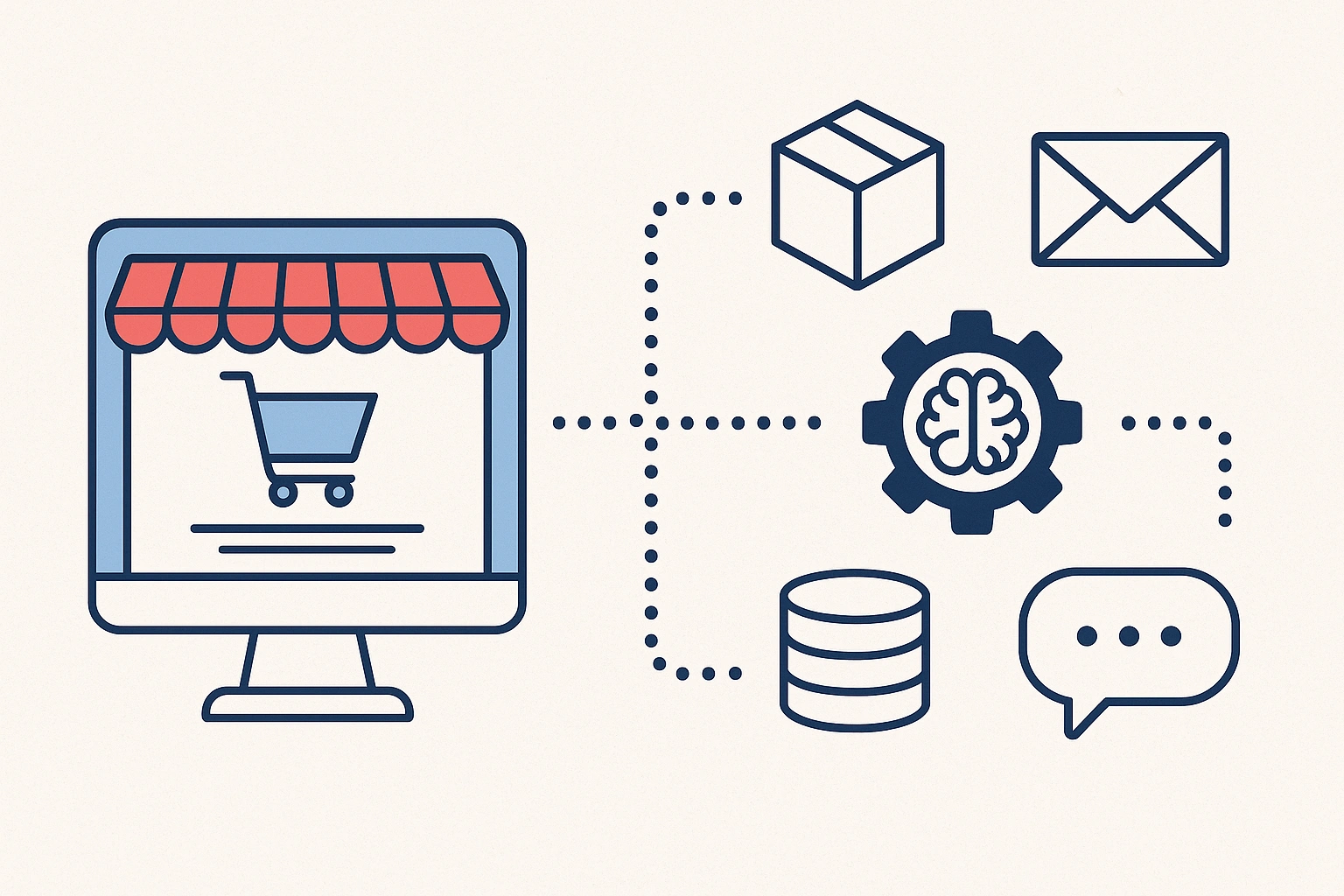
In Shopware, AI orchestration is not just a tool. It is an approach. Instead of jumping between apps or repeating the same steps, the system moves on its own. An order is placed. A confirmation is sent. Inventory is updated. The warehouse is notified. Support is prepared. All of this happens through one smart line that ties it together.
That is what Shopware webhook automation does. It watches for a signal. The moment something changes, it starts the flow. Shopware event-driven workflows go a step further. They follow that change with purpose, taking each action in the right order.
Some actions need time. Some need power. That is where Shopware async processing AI comes in. It takes care of what would slow a store down. It runs calculations, predictions, and responses in the background, keeping the customer experience fast and smooth.
As these flows become more connected, AI becomes more than a helper. It becomes part of the system. With tools like Shopware with AWS Step Functions, Shopware with Google Cloud Workflows, and Shopware with Prefect, the automation adapts. It does not just repeat. It improves.
AI orchestration is not about doing everything at once. It is about doing the right thing at the right time. Quietly, intelligently, and without missing a beat.
Shopware already delivers strength in structure. But when AI orchestration tools are layered on top, something new happens. The platform begins to anticipate. It listens, reacts, and moves forward without hesitation. It becomes more than a tool. It becomes a system that learns with every interaction.
Every action can be part of a larger chain. A product gets updated. A customer responds. An email goes out. Stock levels shift. With orchestration, these moments are connected. They carry meaning. They create momentum.
Shopware background job automation handles the large tasks without slowing anything down. It works behind the scenes, updating data, syncing orders, or organizing customer activity while the storefront stays smooth and responsive.
Visual design platforms like Shopware workflow builder tools allow teams to map out how work should flow. These tools make logic easy to follow. Instead of lines of code, there are steps. Instead of guesswork, there is clarity.
For more structured tasks, Shopware with Automation Anywhere and Shopware with UIPath bring precision. These tools follow rules with perfect timing. They click, check, send, and record exactly what they are told. They perform the work of entire teams without losing pace or focus.
All of these parts form what many call a Shopware process automation stack. It is a foundation of tools working together. Each one does something simple. Together, they do something powerful. This is how Shopware becomes not just faster, but smarter.
The goal is not to build more tools. It is to make sure the right tools are in the right place. When that happens, automation begins to feel less like technology and more like strategy.
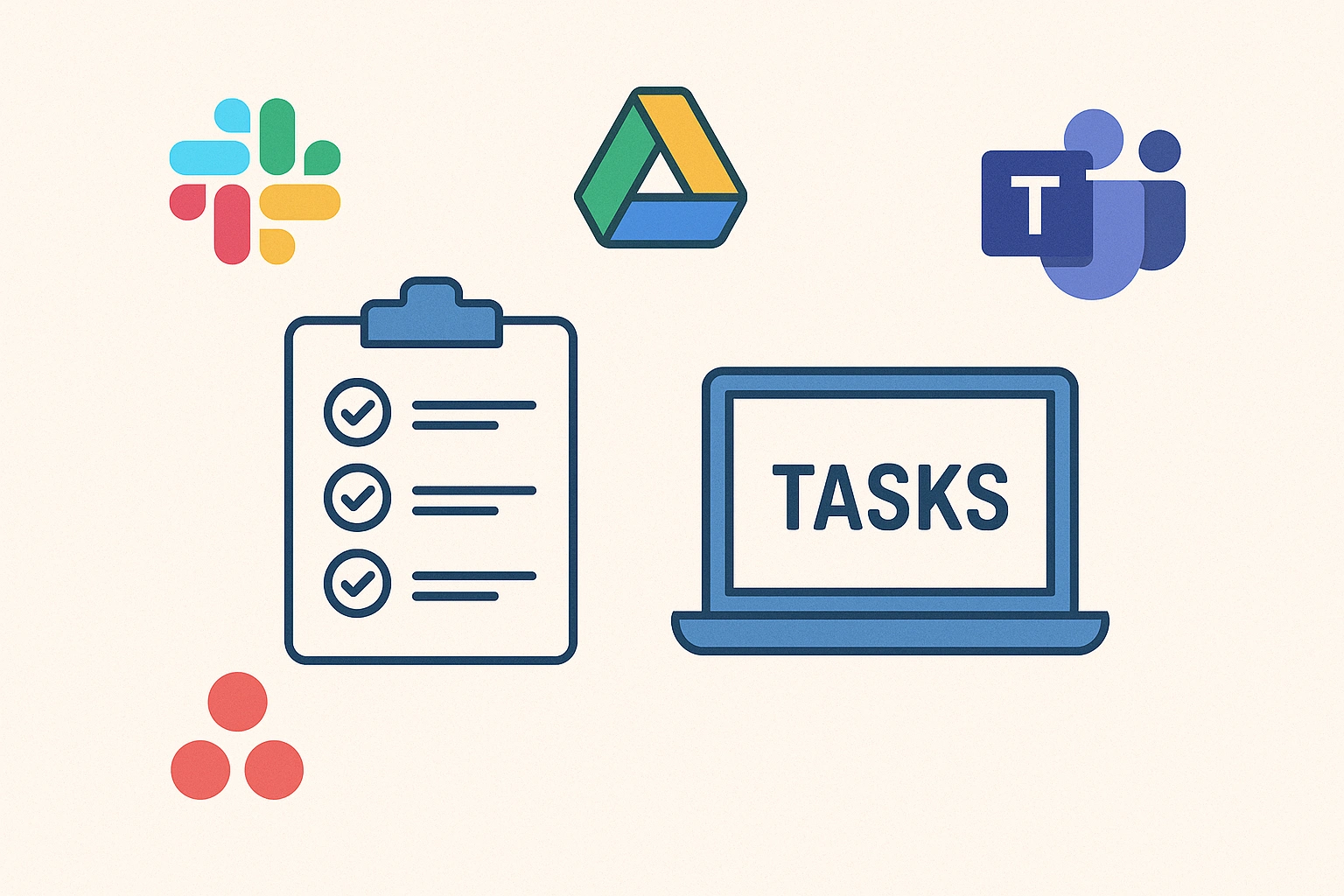
Shopware is built to adapt, but its true potential is unlocked when it connects with the rest of the tools a business already uses. That is where automation platforms come in. They act as bridges, moving data, syncing systems, and keeping everything in tune.
These platforms do more than send information from one app to another. They create entire flows that replace manual work, reduce delays, and prevent mistakes. The result is a Shopware store that runs smoothly from end to end.
Each platform brings something unique:
These platforms are not just add-ons. They are essential. They help Shopware talk to email systems, payment gateways, CRMs, and fulfillment providers. They make the store more connected, more aware, and more reliable.
With the right setup, one change in Shopware can update ten different tools. A customer signs up. A tag is added. An email is prepared. A shipping label is created. All without writing code.
This is how automation platforms make Shopware global, scalable, and ready for whatever comes next.
Automation becomes something more when artificial intelligence enters the picture. It stops being a set of rules and starts becoming a system that understands. In Shopware, AI is not just a feature. It is a layer. Quiet. Constant. Powerful.
This layer does not need attention. It does not need direction. It listens. It watches for patterns. It fills in the gaps that people miss. When combined with orchestration tools, AI becomes the brain behind the movement.
AI is not just used at the surface. In orchestration, it works underneath. Tools like AI orchestration tools Shopware supports manage when AI should respond, how it connects to workflows, and what it does next.
When AI tasks take time, Shopware async processing AI takes over. It runs larger actions, like generating reports or scoring leads, without holding up the customer experience.
This layer of intelligence becomes part of the daily flow. It is not a plugin. It is not a feature. It is a shift in how decisions are made, and how fast those decisions are put into motion.
Running an online store involves hundreds of moving parts. Some are small. Some are critical. Many are repeated every day. When those tasks stay manual, they take time and energy away from the work that moves a business forward.
That is why automation builders matter. They help create order. They make actions predictable. They reduce the need for oversight. And most importantly, they let teams focus on the goals that matter.
With Shopware workflow builder tools, automation becomes visual. Each step is defined. Each outcome is clear. Teams can build the exact flow they need, whether it is for order fulfillment, product updates, customer tagging, or anything in between.
Workflows become even more powerful when they react to events. A customer places an order. A product goes out of stock. A refund is issued. These triggers are the foundation of Shopware event-driven workflows. They allow the system to act without being told. No one has to check or click or remember.
When work needs to run quietly, Shopware background job automation takes the pressure off the storefront. Tasks run in the background. Reports are generated. Files are synced. Emails are sent. All without slowing down the customer experience.
This is how everyday work becomes a system. Teams do not need to chase small tasks. They know the system is built to follow rules, meet expectations, and adjust in real time.
For larger operations, tools like Shopware with IBM Watson Orchestrate and Shopware with Automation Anywhere help automate even more. They take on repetitive tasks that cross between systems. They fill out forms, move files, and notify the right people. Everything is logged. Everything is consistent.
Manual work will always exist. But with the right tools, it becomes optional. The store runs without constant checking. And teams gain space to focus on what is ahead.
Every business grows at its own speed. Some begin with a simple idea and a handful of products. Others grow quickly, moving into new markets with more customers and more complexity. No matter the size, what matters is control. That is what AI orchestration brings to Shopware. It gives every store a path to grow without losing direction.
For small teams or solo founders, platforms like Zapier Shopware integration and Make Shopware integration offer fast solutions. They take care of the basics, automate emails, update stock, and connect systems that usually require manual effort. These tools are perfect for early growth, helping stores stay organized without adding stress.
As operations expand, the needs change. Larger catalogs. More customers. Greater expectations. This is where tools like Shopware with Node-RED, Shopware with Retool, and Shopware with Prefect become essential. They bring flexibility and allow deeper customization, helping stores manage volume without adding chaos.
For companies with multiple teams and advanced systems, orchestration becomes the foundation. Every step, from order to fulfillment, needs to be aligned. Tools like Shopware with Temporal and Shopware with Apache Airflow provide the structure to run complex workflows, monitor performance, and adjust when needed.
The Shopware automation platform supports these tools. It gives businesses a central space to build, test, and refine how tasks move through the system. Instead of relying on manual fixes, everything is mapped and controlled.
Using a composable automation Shopware strategy, stores can build solutions piece by piece. They can start with smaller tools, grow into larger flows, and always stay in control. Each part is designed to work on its own, but together they form a system that is strong, flexible, and built for change.
Scaling is not just about adding more. It is about doing more with focus, with balance, and with confidence.
There is a moment in every business when the pieces finally align. The store runs, the systems connect, the team trusts the process. That is what orchestration is made for. Not just automation, but harmony. Not just speed, but rhythm.
When AI, automation platforms, background tasks, and workflow builders come together in Shopware, the store feels different. There is less noise. Less delay. Less chasing small tasks that should have handled themselves.
Every part of the business begins to reflect the same direction. A customer buys a product. The inventory adjusts. A follow-up is sent. A note is logged. A dashboard updates. No one needs to ask what happened. The system already knows.
This is what happens when Shopware webhook automation, Shopware async processing AI, and Shopware with OpenAI are part of the same conversation. The store doesn’t wait for problems. It notices. It reacts. It improves.
The value is not just in what gets done. It is in the space that opens up when the small things no longer demand attention. That space can be used to build, to imagine, to grow.
From Shopware with AutoGPT and Shopware LangChain automation to Shopware process automation stack, the tools are already here. The key is knowing how to shape them into a system that fits the business perfectly.
And that is where experience makes a difference.
The best systems do not ask for attention. They just work. Quietly. Consistently. Intelligently.
That is what orchestration brings to Shopware. It creates space. It creates confidence. It clears the clutter that holds businesses back and replaces it with something that moves forward on its own.
Getting to that point does not require a full rebuild. It starts with understanding the tools. Seeing the patterns. Choosing the flows that match the way the business already thinks. Then letting those flows evolve and respond with clarity.
The result is not just efficiency. It is ease. It is confidence that when a store is running, every part is moving in the same direction.
This is the kind of system solution25 helps build. One that feels simple, even when the work behind it is complex. One that grows without breaking. One that learns with time.
Orchestration is not the end goal. It is the foundation. What gets built on top is where the real vision starts to take shape.
